
The Mountains of Scotland: A Complete Guide to Scotland’s Most Spectacular Peaks
The mountains of Scotland are among the country’s greatest natural treasures. From the vast plateaus of the Cairngorms to the dramatic ridges of Glencoe, the isolated peaks of Assynt and the wild Cuillin mountains of the Isle of Skye, Scotland offers some of the most spectacular mountain scenery in Europe.
For many visitors, the mountains are one of the main reasons to travel to Scotland. They shape the landscape, define the Highlands and form the backdrop to countless lochs, glens, castles and historic roads.
Some visitors come to climb them. Others simply want to enjoy the scenery from a private tour, scenic drive or Highland viewpoint.
Whatever your reason for visiting, the mountains of Scotland offer an extraordinary mixture of beauty, history, geology and wilderness.
This guide explores the most famous Scottish mountains, the best regions for mountain scenery, Scotland’s Munros and mountain ranges, the best times to visit and some of the most spectacular places to experience Scotland’s mountain landscapes.
Why Are the Mountains of Scotland So Special?
Scotland’s mountains may not be the highest in Europe, but height alone does not determine how dramatic a landscape feels.
Many Scottish mountains rise directly from sea level, deep glens or remote lochs. That creates enormous visual impact.
The landscape has also been shaped by glaciers, geological movements and thousands of years of erosion. The result is a country filled with distinctive ridges, corries, valleys and isolated peaks.
Scotland’s constantly changing weather adds another dimension.
A mountain can appear completely different within a single hour.
Bright sunshine may illuminate a ridge before clouds descend across the summit. Mist can fill a glen and then disappear, revealing snow covered peaks behind it.
For photographers and visitors travelling through the Highlands, this changing atmosphere is part of the appeal.
How Many Mountains Are There in Scotland?
Scotland contains hundreds of mountains, with more than 280 officially classified Munros.
A Munro is a Scottish mountain with a height of at least 3,000 feet, or 914.4 metres.
The term comes from Sir Hugh Munro, who published the first list of Scotland’s mountains over 3,000 feet in the late nineteenth century.
Climbing all of Scotland’s Munros is known as Munro bagging, and people who complete the entire list are known as Munroists.
But Scotland’s mountain landscape is much broader than the Munros.
Other classifications include Corbetts, Grahams and Donalds, while many lower mountains and hills are every bit as beautiful as the higher peaks.
Ben Nevis: The Highest Mountain in Scotland
No guide to the mountains of Scotland can begin anywhere else.
Ben Nevis is the highest mountain in Scotland and the highest mountain anywhere in the United Kingdom.
It rises to approximately 1,345 metres above sea level beside the town of Fort William.
Ben Nevis attracts climbers from around the world, but the mountain is impressive even for visitors who have no intention of climbing it.
The surrounding scenery includes Glen Nevis, waterfalls, rivers and dramatic mountain landscapes.
Fort William has become known as the Outdoor Capital of the UK, partly because of Ben Nevis and the surrounding mountains.
The mountain has two very different characters.
From the more accessible western side, it appears as a huge rounded mountain.
From the north, however, Ben Nevis reveals dramatic cliffs and corries which attract experienced mountaineers and climbers.
Can You Climb Ben Nevis?
Thousands of people climb Ben Nevis every year using the Mountain Track.
Although this is the standard walking route, it should never be underestimated.
Weather conditions can change rapidly and the summit can be cold, wet or covered in cloud even when conditions are pleasant in Fort William.
Anyone planning to climb should carry appropriate clothing, navigation equipment and supplies.
Visitors who simply want to enjoy the mountain scenery can explore Glen Nevis or viewpoints around Fort William instead.
The Cairngorm Mountains
The Cairngorms contain some of the highest mountains in Scotland.
Located within Cairngorms National Park, this enormous mountain area stretches across parts of the Highlands and Aberdeenshire.
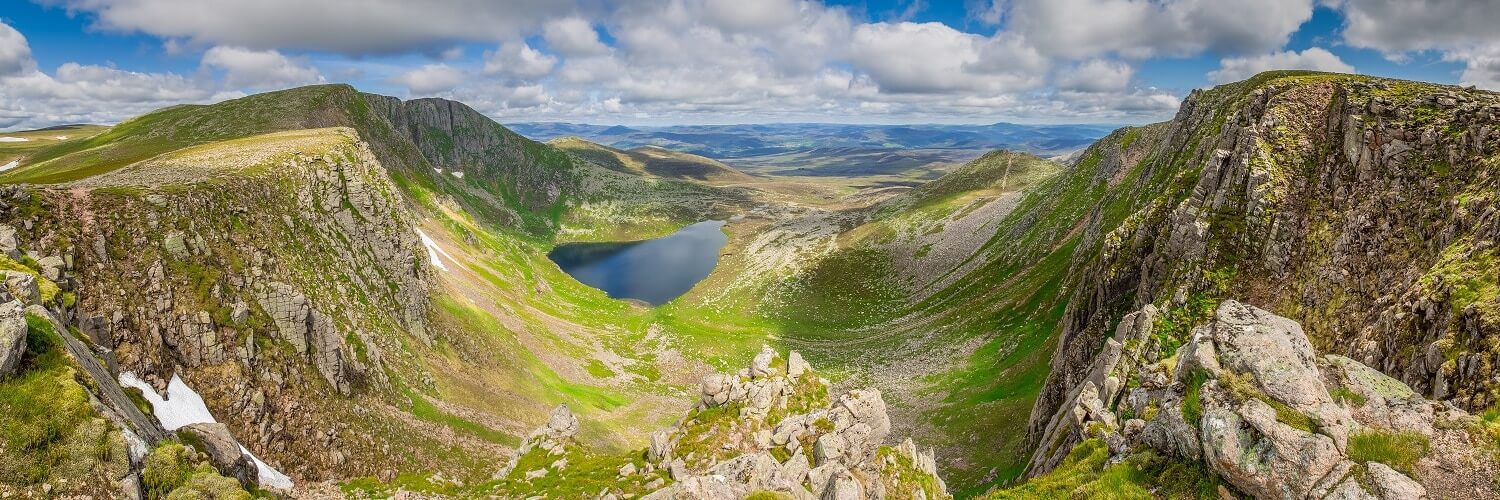
Unlike some of Scotland’s sharply pointed western mountains, much of the Cairngorm landscape consists of vast high plateaus.
The scale is extraordinary.
The mountains can feel open, remote and almost Arctic during winter.
Several of Scotland’s highest peaks are found here, including Ben Macdui, Braeriach, Cairn Toul, Sgor an Lochain Uaine and Cairn Gorm.
Ben Macdui
At approximately 1,309 metres, Ben Macdui is the second highest mountain in Scotland and the United Kingdom.
It lies in the heart of the Cairngorms and offers huge views across the surrounding mountain plateau.
The landscape can feel extremely remote, particularly away from the busier areas near Aviemore.
Cairn Gorm
Cairn Gorm is one of the most famous mountains in the region and gives its name to the wider mountain range.
The area around Cairn Gorm is popular throughout the year, with walking in summer and winter mountain activities when conditions allow.
Nearby Aviemore provides an excellent base for exploring the Cairngorms.
Glencoe and the Mountains of the Western Highlands
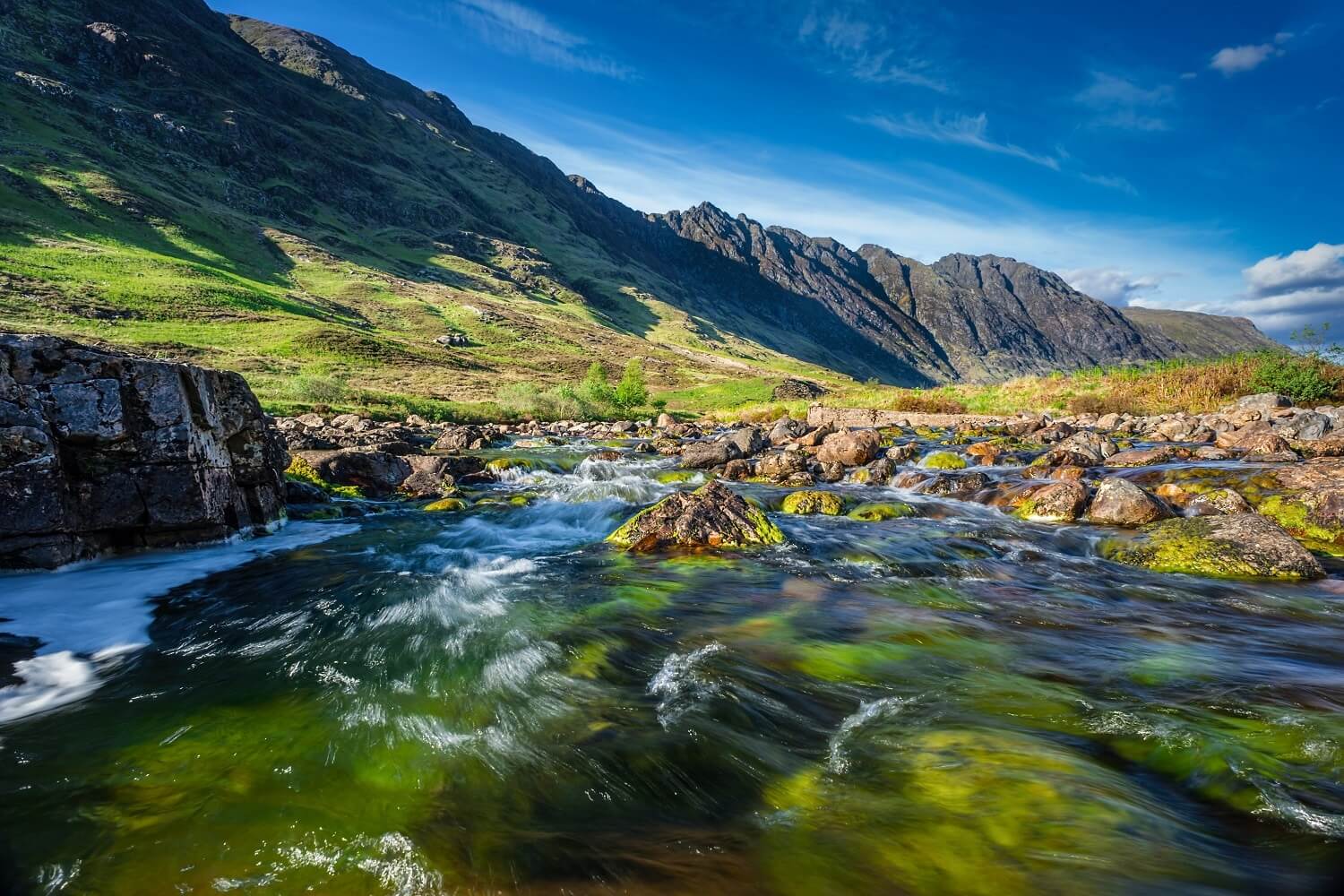
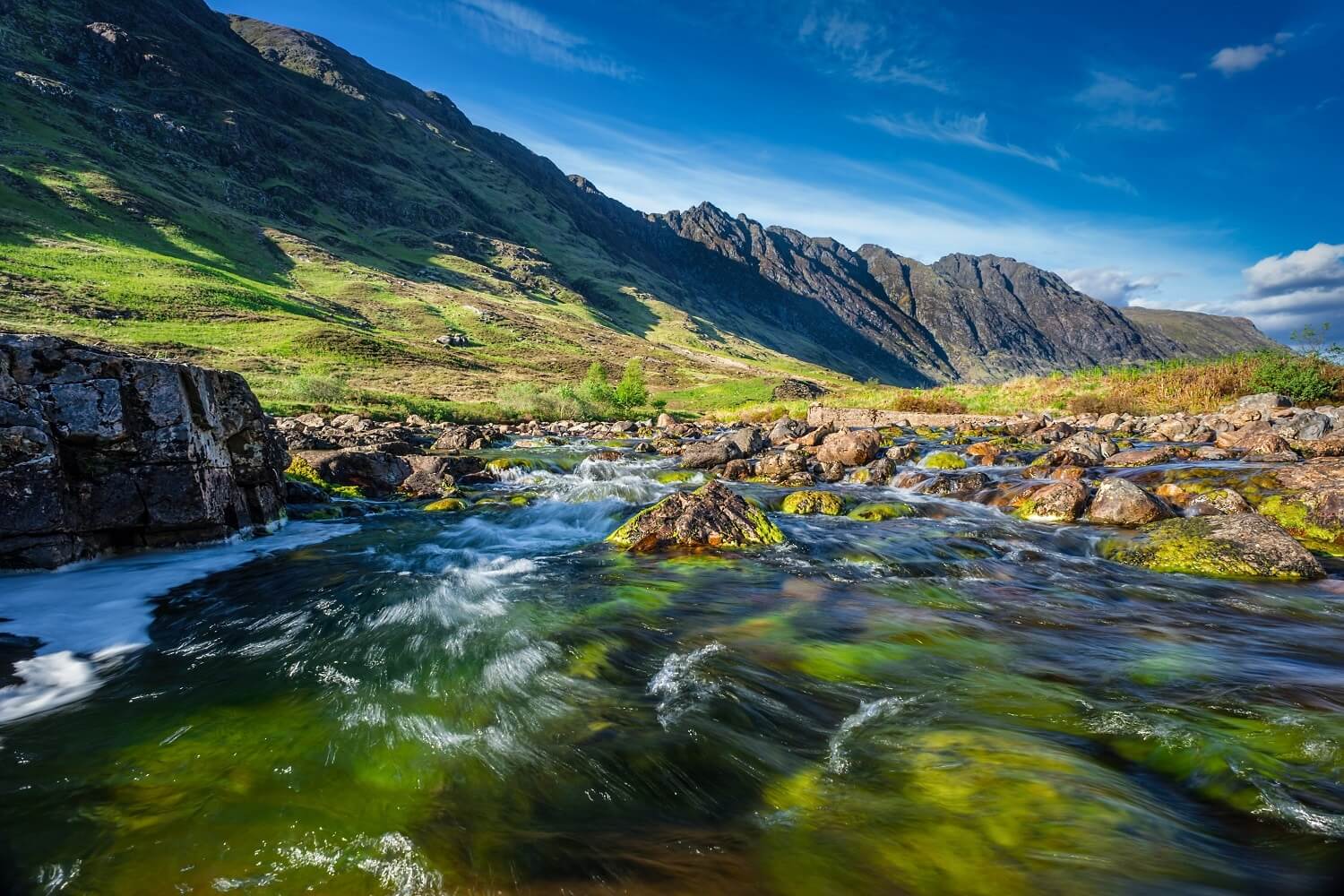
Few places capture the drama of the Scottish Highlands as powerfully as Glencoe.
The glen is surrounded by steep mountains and deep valleys formed by ancient volcanic activity and glaciation.
Driving through Glencoe on the A82 is one of Scotland’s great scenic experiences.
Some of the most famous mountains include Bidean nam Bian, Buachaille Etive Mòr, Buachaille Etive Beag, Aonach Eagach and the Three Sisters of Glencoe.
Buachaille Etive Mòr
Buachaille Etive Mòr is one of the most photographed mountains in Scotland.
Its distinctive pyramid shape rises above Rannoch Moor near the entrance to Glen Etive.
It is often photographed beside the River Coupall, particularly during early morning or when snow covers the summit.
For many visitors, this is exactly what they imagine when they think of the Scottish Highlands.
The Three Sisters of Glencoe
The Three Sisters form part of the Bidean nam Bian massif.
They rise dramatically from the southern side of Glencoe and are easily viewed from roadside viewpoints.
This makes Glencoe one of the best places in Scotland for visitors who want exceptional mountain scenery without having to undertake a long walk.
The Cuillin Mountains on the Isle of Skye
The Cuillin mountains on the Isle of Skye are unlike almost anywhere else in Scotland.
The Black Cuillin form a jagged mountain ridge of dark volcanic rock.
Their sharp peaks create one of the most dramatic skylines in Britain.
For experienced climbers, the Cuillin Ridge is one of the most challenging mountain traverses in the country.
For everyone else, the mountains provide a spectacular backdrop to some of Skye’s most famous landscapes.
Excellent viewpoints include Sligachan, Elgol, Glen Brittle, the Fairy Pools and Loch Coruisk.
Sligachan
Sligachan is one of the easiest places to appreciate the Cuillin mountains.
The old stone bridge, river and mountain backdrop create one of the classic landscapes of Skye.
Elgol
The small village of Elgol offers extraordinary views across Loch Scavaig towards the Cuillin.
On a clear day, this is one of the finest mountain views in Scotland.
Torridon: Some of Scotland’s Most Dramatic Mountains
The mountains of Torridon are among the oldest and most distinctive in Scotland.
Located in the north west Highlands, the landscape is dominated by enormous sandstone peaks rising above lochs and glens.
Some of the best known mountains include Liathach, Beinn Alligin and Beinn Eighe.
Liathach
Liathach is one of the most impressive mountains in Scotland.
Its long rocky ridge dominates Glen Torridon and creates an almost fortress like appearance.
It is a serious mountain for experienced walkers, but the scenery can be enjoyed from the road through Torridon.
Beinn Eighe
Beinn Eighe forms part of the Beinn Eighe National Nature Reserve.
The mountain landscape here combines rugged peaks, ancient woodland and wildlife.
Torridon is particularly rewarding for photographers because the mountains rise dramatically above nearby lochs.
Assynt and the Mountains of the North West Highlands
Assynt contains some of the most unusual mountain landscapes in Scotland.
Instead of long connected ranges, isolated mountains rise individually from a landscape filled with lochs and rocky moorland.
This creates a very distinctive appearance.
Famous mountains include Suilven, Stac Pollaidh, Quinag and Canisp.
Suilven
Suilven is one of Scotland’s most recognisable mountains.
Although it is not a Munro, its isolated shape makes it appear extremely dramatic.
From certain angles, Suilven resembles a huge whale backed ridge rising from the surrounding wilderness.
Stac Pollaidh
Stac Pollaidh is another extraordinary mountain near Ullapool.
Its rocky pinnacles create a distinctive silhouette visible from many miles away.
Because the mountain is relatively accessible compared with some Highland peaks, it is popular with walkers.
The surrounding views across Assynt are outstanding.
The Mountains of Glen Affric
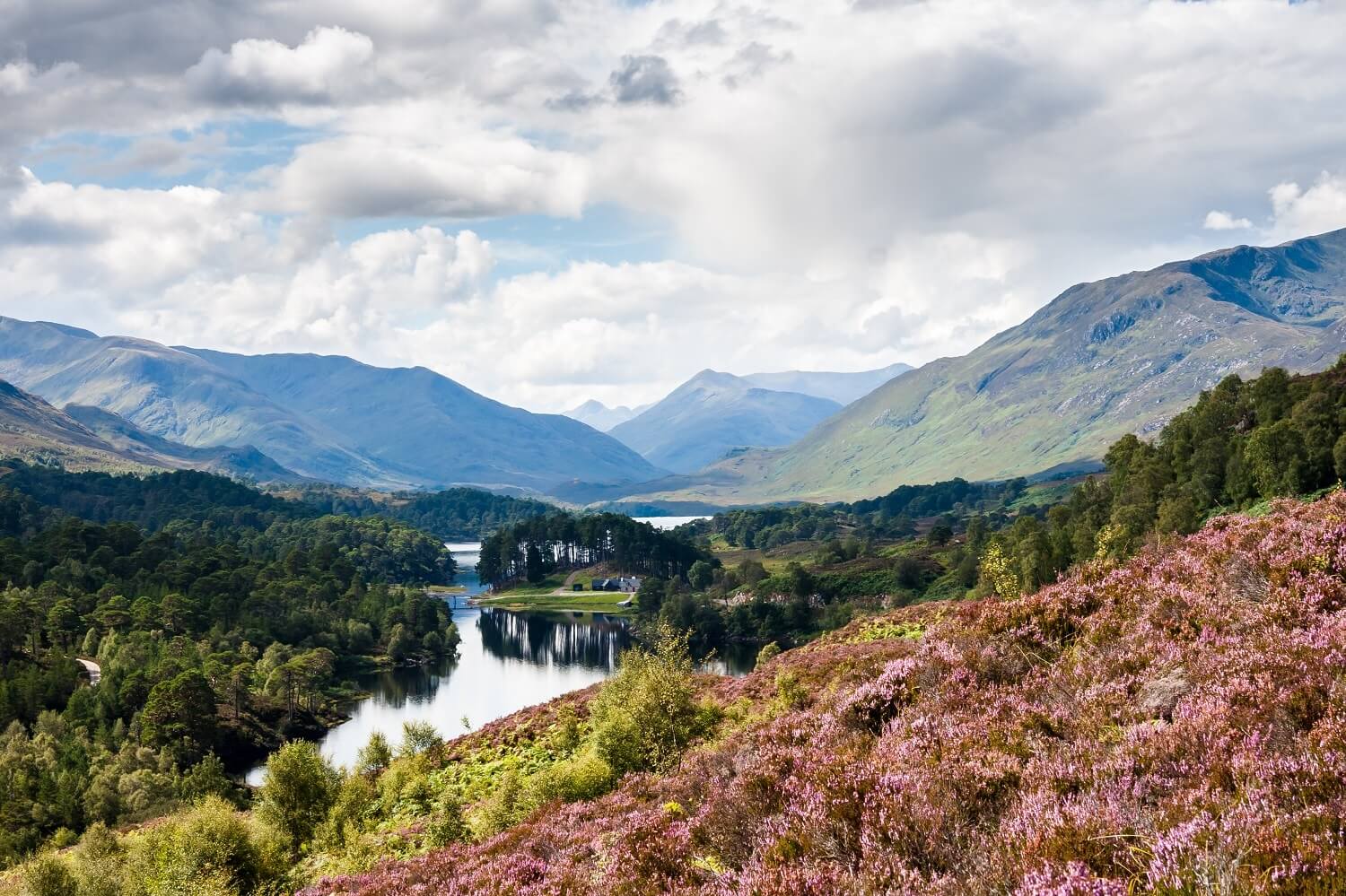
Glen Affric is often described as one of Scotland’s most beautiful glens.
Located west of Loch Ness, it combines mountains, ancient Caledonian pine forest and beautiful lochs.
The mountains surrounding Loch Affric provide a spectacular backdrop, particularly during autumn when the forest changes colour.
Compared with some of Scotland’s more famous mountain destinations, Glen Affric can feel quieter and more peaceful.
It is an excellent addition to a private Highland tour from Inverness.
The Mountains Around Loch Ness
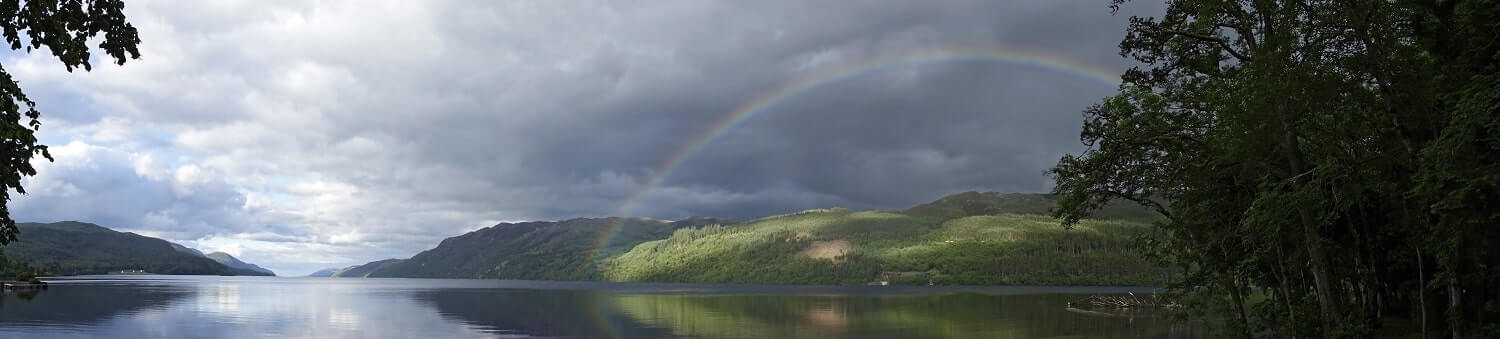
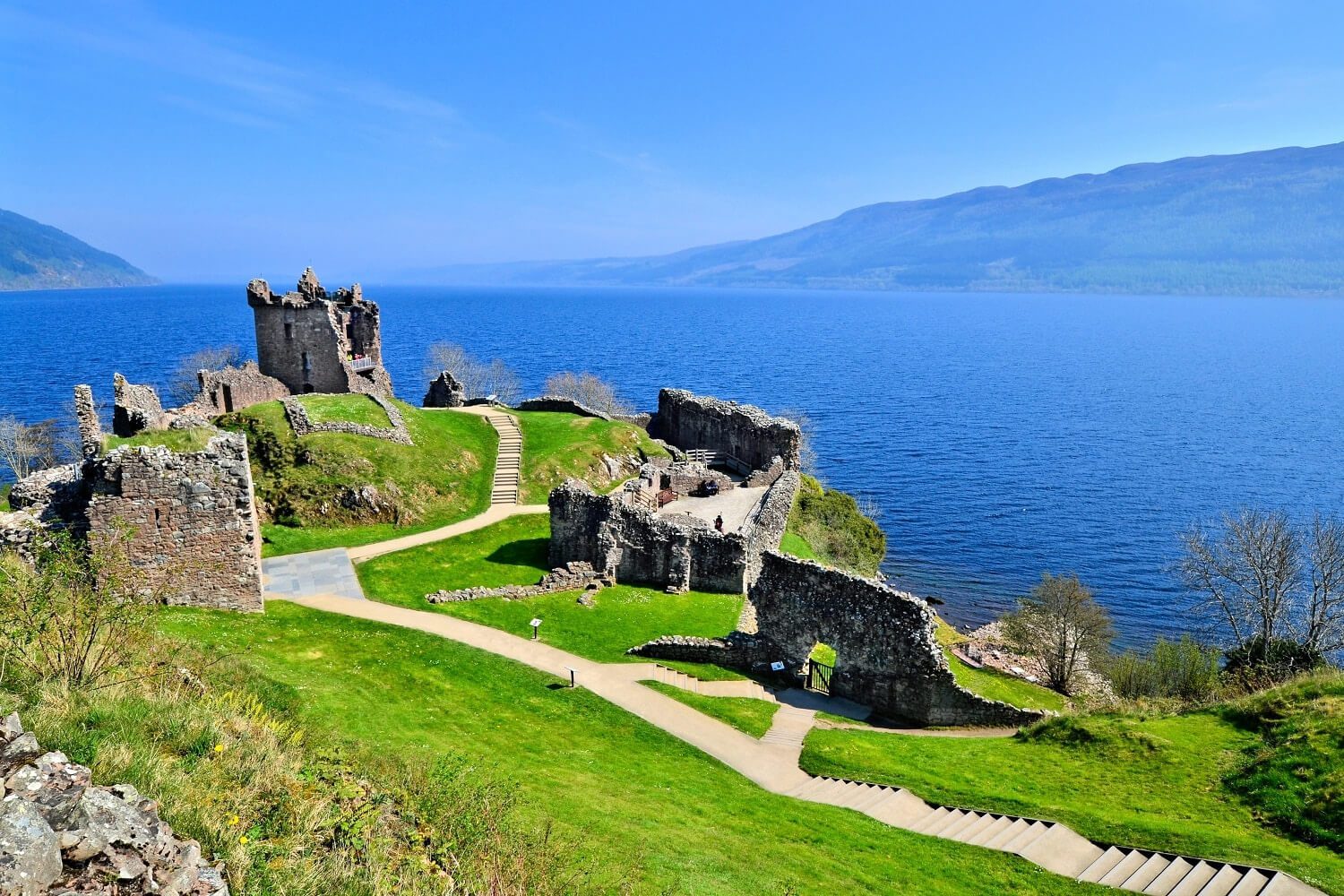
Loch Ness runs through the Great Glen, one of Scotland’s major geological faults.
Although the mountains around Loch Ness are generally less dramatic than those around Glencoe or Torridon, the combination of mountains, water and forests creates beautiful scenery.
High viewpoints around the loch give visitors a sense of its enormous scale.
Nearby mountain landscapes can also be explored around Glen Affric, Strathglass, Fort Augustus and Glenmoriston.
This makes Loch Ness an excellent starting point for exploring the western Highlands.
The Five Sisters of Kintail
The Five Sisters of Kintail form one of the most dramatic mountain ridges in the western Highlands.
The mountains rise above Glen Shiel near the route between Inverness and the Isle of Skye.
The ridge is popular with experienced hillwalkers.
For visitors travelling by road, however, the mountains can be appreciated from viewpoints throughout Glen Shiel.
The surrounding area provides some of the classic scenery associated with Highland Scotland.
The Mamores
Near Fort William lies another spectacular range known as the Mamores.
These mountains stand south of Ben Nevis and include several Munros.
The ridges are popular with experienced walkers and provide superb views across Loch Leven, Glen Nevis and surrounding Highland landscapes.
The Mamores are less internationally famous than Ben Nevis but form an important part of the mountain scenery around Fort William.
Rannoch Moor
Rannoch Moor is not a mountain itself, but it provides one of Scotland’s great mountain landscapes.
This vast wilderness sits between Bridge of Orchy and Glencoe.
Small lochs, peat bogs and open moorland stretch towards distant mountains.
The A82 crosses the moor, creating one of Scotland’s most atmospheric drives.
In winter, the surrounding mountains can be covered in snow.
In autumn and spring, changing weather can produce dramatic light across the landscape.
The Arrochar Alps
The Arrochar Alps lie close to Loch Lomond and are among the most accessible mountain ranges from Glasgow.
They include mountains such as the Cobbler, Beinn Ìme and Beinn Narnain.
The Cobbler
The Cobbler, officially known as Ben Arthur, is one of Scotland’s most distinctive mountains.
Its unusual rocky summit gives the mountain a unique profile.
Because of its location close to Loch Long, it is a popular walking destination.
The surrounding area is particularly convenient for visitors who want to experience Highland style mountain scenery without travelling deep into northern Scotland.
Mountains of Perthshire
Perthshire offers gentler mountain landscapes compared with the rugged west coast.
The area includes forests, lochs and broad Highland valleys.
Popular mountains include Ben Lawers and Schiehallion.
Ben Lawers
Ben Lawers is one of Scotland’s highest mountains and forms part of a larger mountain range near Loch Tay.
The surrounding nature reserve is known for rare alpine plants.
Schiehallion
Schiehallion has one of Scotland’s most distinctive mountain shapes.
Its almost symmetrical appearance has made it a famous landmark.
The mountain also has an important place in scientific history because it was used in eighteenth century experiments to estimate the mass of the Earth.
Mountains of Royal Deeside
The eastern side of the Cairngorms reaches into Royal Deeside.
This region has long associations with the British Royal Family and includes beautiful Highland scenery around Balmoral.
Mountains rise above forests, rivers and estates.
The area is excellent for combining mountain landscapes with visits to castles and traditional Highland towns such as Braemar and Ballater.
The Mountains of Wester Ross
Wester Ross contains some of Scotland’s wildest mountain landscapes.
The region stretches through areas including Applecross, Torridon and the coast north towards Ullapool.
The mountains often rise directly from sea lochs, creating dramatic scenery.
Roads through Wester Ross can be narrow and winding, but the views are exceptional.
The famous Bealach na Bà mountain road crosses the Applecross peninsula and reaches one of the highest road passes in Scotland.
From the summit area, views can extend towards the Isle of Skye and the Inner Hebrides.
The Mountains Along the North Coast 500
The North Coast 500 passes through numerous mountain regions.
Starting and finishing in Inverness, the route travels around the northern Highlands.
Some of the most impressive mountain scenery is found around Torridon, Assynt, Applecross, Wester Ross and Sutherland.
Driving the North Coast 500 gives visitors the chance to see dramatically different mountain landscapes within one journey.
The western section is particularly mountainous.
Mountain Scenery in the Outer Hebrides
The Outer Hebrides are perhaps better known for beaches, but the islands also contain dramatic mountain scenery.
The mountains of Harris rise directly above white beaches and turquoise water.
This contrast creates some of the most extraordinary landscapes in Scotland.
From locations such as Luskentyre and Seilebost, photographers can capture mountains rising behind huge expanses of sand.
Mountain Wildlife in Scotland
Scotland’s mountains support a wide range of wildlife.
Visitors may encounter red deer, golden eagles, mountain hares, ptarmigan, red grouse and ravens.
The Cairngorms are particularly important for mountain wildlife because of their high altitude habitat.
Wildlife should always be observed responsibly and from an appropriate distance.
Best Time to Visit the Mountains of Scotland
There is no single best time to experience Scotland’s mountains.
Every season has advantages.
Spring
Spring can provide some of the best mountain conditions.
Snow may remain on higher peaks while valleys begin turning green.
Days become longer and visitor numbers are often lower than during summer.
Summer
Summer offers the longest daylight hours.
This makes it easier to explore remote areas and enjoy long scenic drives.
June can have exceptionally long evenings in the Highlands.
Popular locations, however, can become busy during July and August.
Autumn
Autumn is one of the most beautiful seasons in Scotland.
Woodland surrounding mountain valleys changes colour and mornings can bring mist across lochs and glens.
Glen Affric, Perthshire and the Cairngorms can be particularly beautiful.
Winter
Winter transforms Scotland’s mountains.
Snow can cover the highest peaks and low winter sunlight creates dramatic photography conditions.
However, mountain weather can be severe.
Anyone planning to hike should have appropriate experience and equipment.
Scotland’s Mountains for Photography
The mountains of Scotland provide endless opportunities for photography.
Some of the best locations include Glencoe, Buachaille Etive Mòr, Torridon, Assynt, the Isle of Skye, the Cairngorms, Glen Affric, Rannoch Moor and Applecross.
Early morning and late afternoon often provide the best light.
However, photographers should not dismiss cloudy or rainy weather.
Mist and changing clouds can create some of the most atmospheric mountain photographs.
Driving Through the Scottish Mountains
One of the best things about mountain travel in Scotland is that extraordinary scenery can be experienced from the road.
Some excellent scenic routes include Inverness to the Isle of Skye, Glencoe to Fort William, Applecross via Bealach na Bà, Torridon to Ullapool and scenic routes through the Cairngorms.
Inverness to the Isle of Skye
This route passes Loch Ness, Glen Shiel, the Five Sisters of Kintail and Eilean Donan Castle.
It is one of the best ways to combine Highland mountain scenery with famous historic sites.
Glencoe to Fort William
The A82 passes through the heart of some of Scotland’s most dramatic mountain scenery.
The road through Glencoe is one of the classic scenic journeys in the Highlands.
Applecross via Bealach na Bà
This is one of Scotland’s most famous mountain roads.
It is known for steep climbs, hairpin bends and enormous views across the western Highlands.
Torridon to Ullapool
This journey passes through remote Highland landscapes with dramatic mountains and lochs.
It is especially rewarding for visitors looking for quieter scenery away from the busiest tourist routes.
Cairngorms Scenic Routes
Roads around Aviemore, Braemar and Royal Deeside provide excellent views of the Cairngorm mountains.
These routes are ideal for combining mountain scenery with villages, forests, castles and Highland estates.
Hiking in the Mountains of Scotland
Walking is one of the best ways to experience Scotland’s mountains.
However, visitors should understand that even relatively modest mountains can become dangerous in poor weather.
Mountain conditions can change extremely quickly.
Anyone planning longer walks should check weather forecasts, route conditions, appropriate clothing, navigation equipment, daylight hours and personal fitness.
Visitors without hillwalking experience can still enjoy incredible mountain scenery through lower level walks, viewpoints and scenic drives.
What Is Munro Bagging?
Munro bagging is the challenge of climbing all of Scotland’s Munros.
There are more than 280 peaks on the official list.
For some people, completing the Munros becomes a lifelong project.
The mountains range from relatively straightforward hikes to remote and technically demanding routes.
The challenge has become an important part of Scottish outdoor culture.
Private Tours of the Scottish Mountains
A private driver guided tour can be an excellent way to experience Scotland’s mountain scenery.
Mountain areas can involve long distances, narrow roads and rapidly changing weather.
Travelling with a knowledgeable local driver guide provides flexibility.
A private itinerary can include scenic viewpoints, short walks, historic sites, castles, lochs, Highland villages, photography stops and local restaurants.
It also allows the itinerary to adapt to conditions.
If one mountain area is hidden in heavy cloud, another route may offer better scenery.
Mountains Near Inverness
Inverness is an excellent base for exploring several mountain regions.
Within day trip distance are Glen Affric, Cairngorms National Park, Wester Ross, Torridon, Assynt, Glen Shiel and the Isle of Skye.
This makes Inverness particularly useful for visitors who want to experience multiple Highland landscapes without changing accommodation every night.
Mountains Near Edinburgh and Glasgow
Visitors staying in Scotland’s cities can also experience mountain scenery.
From Glasgow, Loch Lomond and the Arrochar Alps are easily accessible.
From Edinburgh, visitors can travel towards Perthshire, Loch Lomond or the southern Highlands.
Multi day private tours can connect Edinburgh and Glasgow with Glencoe, Fort William, Skye and the northern Highlands.
Famous Scottish Mountains to Know
Some of the most famous mountains of Scotland include Ben Nevis, Ben Macdui, Cairn Gorm, Buachaille Etive Mòr, Bidean nam Bian, Liathach, Beinn Eighe, Suilven, Stac Pollaidh, the Cobbler, Schiehallion, Ben Lawers and the Cuillin.
Each has its own character and landscape.
Some are famous because of their height.
Others are famous because of their distinctive shape or setting.
Mountains, Glens and Lochs
What makes Scotland’s mountain scenery particularly special is how closely mountains interact with other features of the landscape.
Many mountains rise directly beside lochs.
Others form the walls of deep Highland glens.
This creates famous landscapes such as Glencoe, where mountains tower over the road through the glen.
Loch Torridon is surrounded by huge sandstone mountains.
Loch Coruisk sits beneath the Cuillin.
Loch Affric is surrounded by mountains and forest.
Loch Lomond becomes increasingly mountainous towards its northern shores.
The combination of mountain, water and changing light produces many of Scotland’s most memorable views.
The Geology of Scotland’s Mountains
Scotland’s mountains have an extraordinary geological history.
Some rocks in the north west Highlands are among the oldest in Europe.
The landscape has been shaped by ancient continents colliding, volcanic activity and repeated periods of glaciation.
Glaciers carved many of Scotland’s glens and corries.
The distinctive shapes of mountains such as those in Glencoe, Skye and Torridon reflect different types of rock and geological processes.
Visitors do not need to be geologists to appreciate the results.
The variety of Scotland’s mountain landscapes is partly explained by this incredibly complex geological history.
Respecting Scotland’s Mountain Environment
Scotland’s mountains are beautiful but fragile environments.
Visitors should follow responsible outdoor practices.
Take litter away, respect wildlife and avoid damaging vegetation.
Parking can be a major issue at popular mountain locations, so visitors should use designated parking areas where possible.
Following the Scottish Outdoor Access Code helps protect the landscape for future generations.
Planning a Scottish Mountain Itinerary
Visitors hoping to see several of Scotland’s mountain regions should allow enough time.
A possible seven day itinerary could begin in Inverness and the Cairngorms, continue through Glen Affric and Loch Ness, then travel to Glen Shiel and Eilean Donan Castle.
From there, visitors could continue to the Isle of Skye and the Cuillin before travelling through Torridon, Applecross and Assynt.
The final journey could return to Inverness through the northern Highlands.
A western Highlands route could instead combine Glasgow, Loch Lomond, Glencoe, Fort William and Skye.
The important thing is not to rush.
Scotland’s mountain roads can be slow, and some of the best experiences come from stopping unexpectedly when the scenery is particularly beautiful.
Why Scotland’s Mountains Belong on Every Highlands Itinerary
The mountains are not simply a backdrop to a holiday in Scotland.
They are part of the experience.
They influence the roads, weather, villages, wildlife, photography and history of the Highlands.
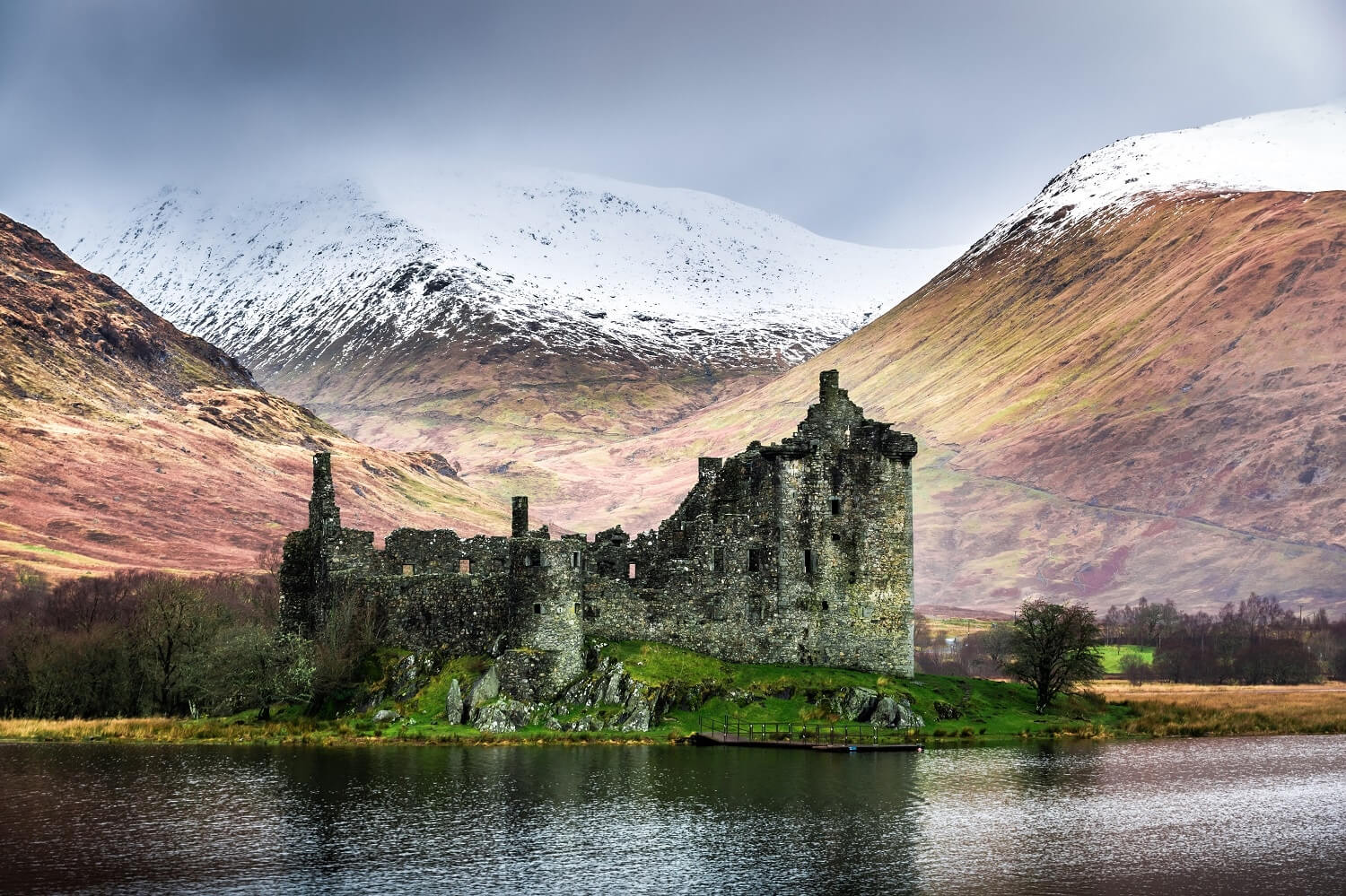
A castle beside a loch becomes more dramatic because of the mountains behind it.
A drive through a Highland glen becomes memorable because of the scale of the landscape.
A quiet roadside viewpoint can become one of the highlights of an entire trip.
This is why mountain scenery is such an important part of private tours of Scotland.
Visitors may arrive wanting to see castles, whisky distilleries, Loch Ness or the Isle of Skye, but the mountains often become one of the things they remember most clearly.
Final Thoughts on the Mountains of Scotland
The mountains of Scotland are one of the defining features of the country.
They create the wild landscapes of the Highlands, surround famous lochs, shelter remote villages and provide some of Britain’s greatest walking and photography locations.
Ben Nevis may be the highest mountain in Scotland, but height is only one part of the story.
The jagged Cuillin of Skye, isolated peaks of Assynt, ancient mountains of Torridon, huge Cairngorm plateaus and dramatic ridges of Glencoe all offer completely different experiences.
You do not have to be a climber to appreciate them.
Some of Scotland’s greatest mountain views can be enjoyed from a roadside viewpoint, beside a loch, from a castle or during a private driver guided tour.
For visitors seeking the landscapes that have made Scotland famous around the world, the mountains are an essential part of the journey.
Whether you visit beneath blue summer skies, autumn colours, winter snow or the atmospheric mist of a Highland morning, Scotland’s mountains rarely fail to impress.