
Most Beautiful Places in Scotland for Photography
Scotland is one of the most photogenic countries in the world. From mist-covered mountains and dramatic sea cliffs to ancient castles, mirror-like lochs and colourful fishing villages, the landscape seems almost designed for photographers.
Whether you are travelling with a professional camera, a drone, or simply your phone, Scotland offers an extraordinary variety of places to photograph. The Highlands provide huge, cinematic landscapes, the islands deliver wild beaches and rugged coastlines, while cities such as Edinburgh offer historic architecture, hidden closes and dramatic skyline views.
For photographers planning a trip to Scotland, the challenge is not finding beautiful places. It is deciding which ones to fit into the itinerary.
This guide explores some of the most beautiful places in Scotland for photography, including famous landmarks, quieter Highland locations, castles, lochs, mountains and coastal landscapes.
1. Glencoe
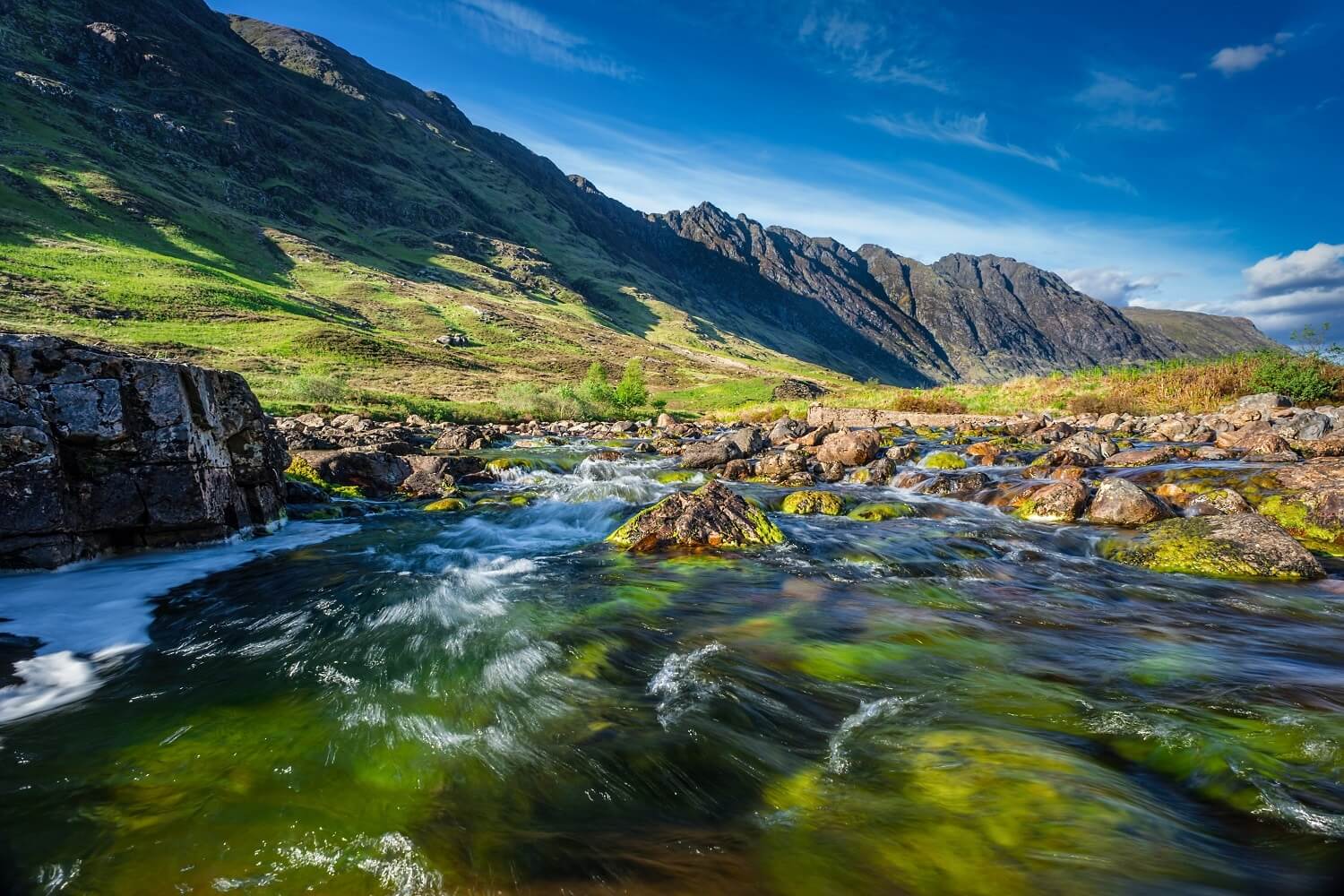
Glencoe is arguably one of the most dramatic landscapes in Scotland and a location that photographers can return to again and again.
The road through the glen is surrounded by towering mountains, waterfalls and huge open landscapes. Weather conditions can change quickly, transforming the atmosphere from bright sunshine to heavy mist within minutes.
That unpredictability is part of Glencoe’s appeal.
One of the most famous photography locations is Buachaille Etive Mòr, the distinctive mountain standing near the entrance to Glen Etive. It has become one of the most photographed mountains in Scotland.
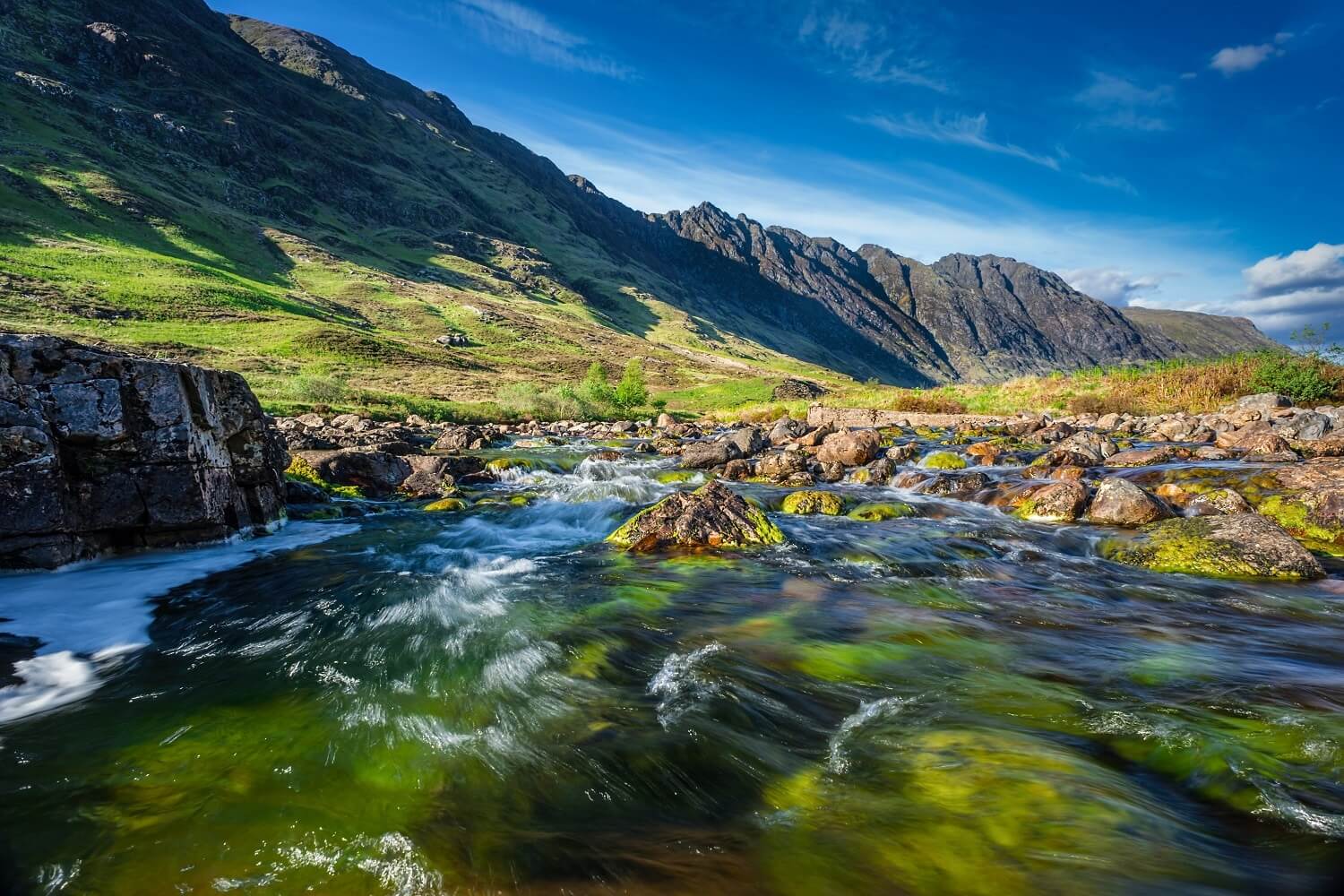
A small river and waterfall in the foreground can create the classic Highland composition, particularly during autumn or after rainfall.
Other excellent photography locations around Glencoe include:
- The Three Sisters of Glencoe
- Loch Achtriochtan
- Glen Etive
- Buachaille Etive Beag
- The viewpoints along the A82
- The waterfalls around the glen
Early morning can be particularly rewarding when mist hangs between the mountains.
In winter, snow on the peaks adds another dimension to the landscape.
2. Isle of Skye
Few places in Scotland offer as many iconic photography locations as the Isle of Skye.
The island has mountains, waterfalls, sea cliffs, rock formations, beaches and castles, often within relatively short distances of each other.
One of the most famous locations is the Old Man of Storr, a dramatic rock formation on the Trotternish Ridge.
Photographers who make the climb early in the morning can sometimes capture the rocks silhouetted against sunrise with views across the Sound of Raasay.
Another famous location is the Quiraing, a landscape created by ancient landslides.
Its unusual rock formations and sweeping views make it one of the best landscape photography locations in Scotland.
Other Isle of Skye photography highlights include:
Fairy Pools
The clear pools and waterfalls beneath the Cuillin Mountains make this a beautiful location for long-exposure photography.
Neist Point Lighthouse
Located on the western edge of Skye, Neist Point offers dramatic cliffs and views across the sea.
Sunset can be particularly spectacular here.
Sligachan
The old stone bridge at Sligachan creates one of the classic Isle of Skye compositions, particularly with the Cuillin Mountains in the background.
Elgol
The small village of Elgol offers wonderful views across Loch Scavaig towards the Cuillin.
Fairy Glen
Rolling green hills and unusual rock formations make the Fairy Glen feel almost otherworldly.
For photographers, Skye is easily somewhere you could spend several days.
3. Eilean Donan Castle
Eilean Donan Castle is one of Scotland’s most recognisable castles.
Located where three sea lochs meet near the village of Dornie, the castle sits on a small tidal island connected to the mainland by a stone bridge.
The classic photograph is taken from across the water, particularly when the loch is calm enough to create reflections.
The light around sunset and sunrise can be especially beautiful.
During winter, snow-covered mountains behind the castle create a completely different atmosphere.
Because Eilean Donan lies on the main route towards Skye, it is also an easy photography stop when travelling between Inverness, the Highlands and the island.
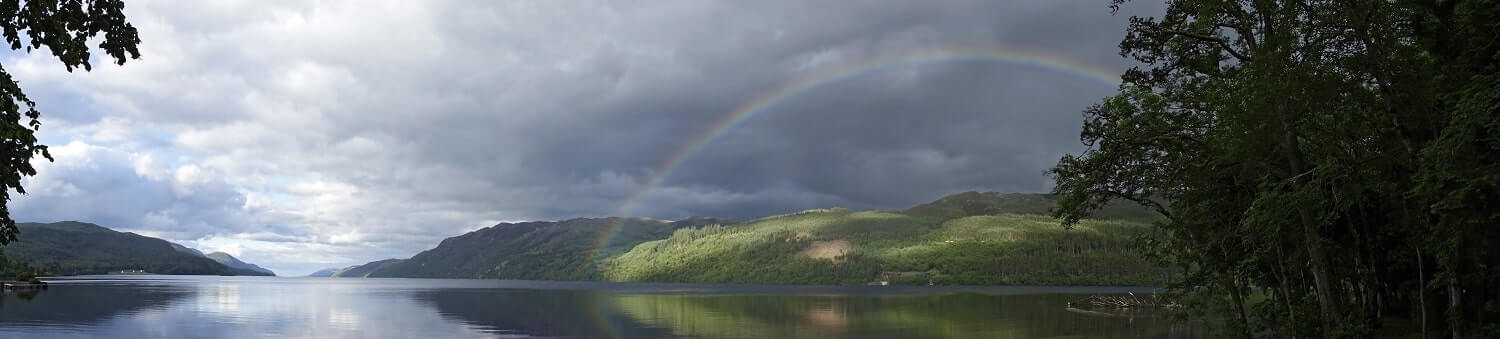
4. Loch Ness
Loch Ness is famous throughout the world because of the legend of the Loch Ness Monster, but photographers quickly discover that the scenery itself is equally impressive.
The loch stretches for more than 20 miles through the Great Glen and is surrounded by mountains, forests and historic villages.
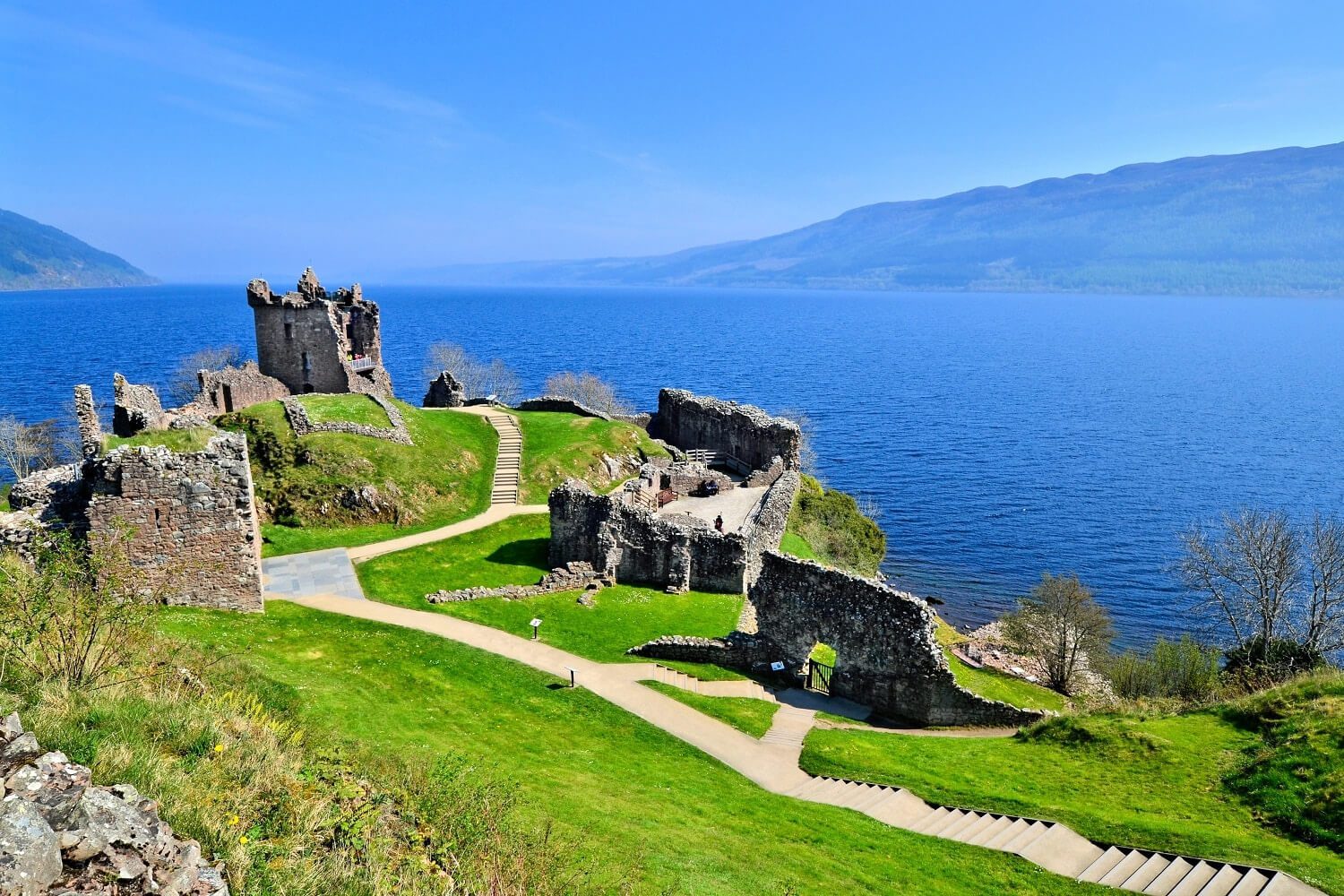
One of the best locations for photography is Urquhart Castle.
The ruins sit directly beside Loch Ness and create a dramatic foreground with the water and mountains behind.
Another excellent viewpoint can be found higher above the loch, where the scale of Loch Ness becomes much more apparent.
Mist is common in the Highlands and can transform Loch Ness into an incredibly atmospheric photography location.
A quiet morning with low cloud drifting across the water can produce far more dramatic images than a perfectly clear day.
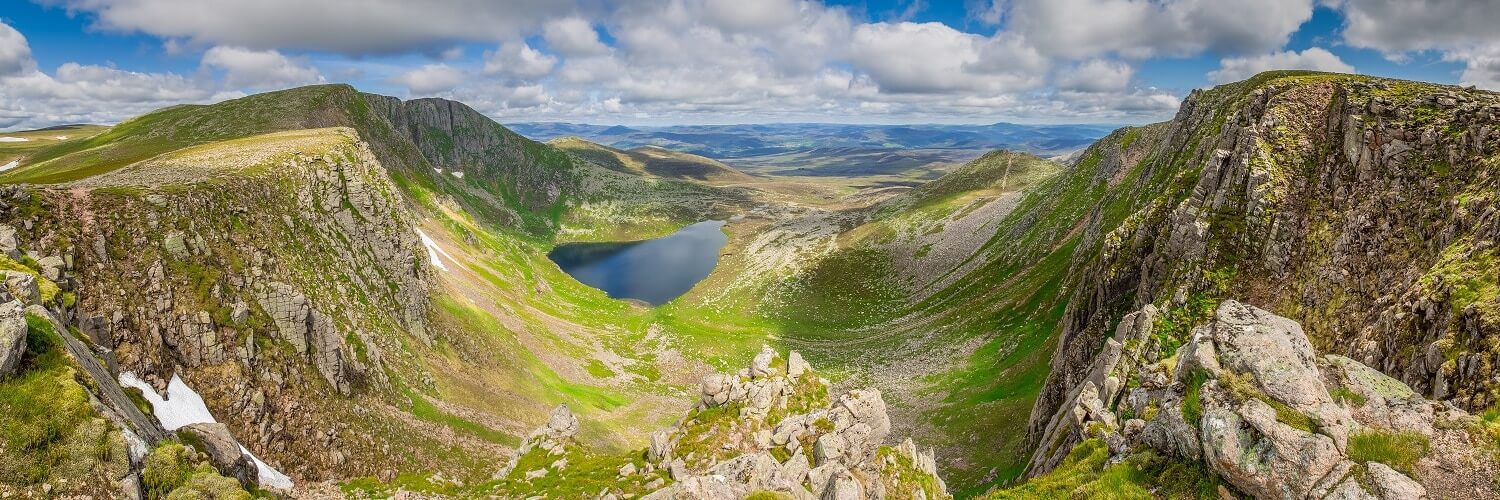
5. The Cairngorms National Park
The Cairngorms provide a very different photographic landscape from the west coast of Scotland.
Here you will find mountains, ancient forests, rivers and wide Highland valleys.
One of the most beautiful locations is Loch an Eilein, near Aviemore.
The loch is surrounded by Rothiemurchus Forest and contains the ruins of a small island castle.
Reflections can be exceptional when the water is calm.
Nearby, Loch Morlich offers mountain views towards the Cairngorms.
In winter the surrounding peaks are often covered in snow, while autumn brings rich colours to the forests.
Wildlife photographers may also find opportunities to photograph red deer, red squirrels and many species of birds.
6. Glenfinnan Viaduct
The Glenfinnan Viaduct has become one of the most famous photography locations in Scotland.
The sweeping railway viaduct curves through a beautiful Highland valley close to Loch Shiel.
It became internationally famous through the Harry Potter films, although the landscape is impressive even without the connection.
When the Jacobite Steam Train crosses the viaduct, photographers can capture one of Scotland’s most recognisable images.
There are several viewpoints overlooking the viaduct.
The elevated viewpoint provides the classic view of the train crossing the arches with the surrounding mountains behind it.
Nearby, the Glenfinnan Monument and Loch Shiel offer additional photography opportunities.
7. Edinburgh
Scotland’s capital is a dream location for architectural and street photographers.
Edinburgh’s historic Old Town rises dramatically above the surrounding city, dominated by Edinburgh Castle.
One of the most famous photography locations is Calton Hill.
From here, photographers can capture views across Edinburgh towards the castle, the Old Town and Arthur’s Seat.
Sunset is particularly popular.
Another excellent location is Victoria Street, with its colourful shopfronts and curved cobbled street.
Other photography locations include:
- Edinburgh Castle
- The Royal Mile
- Dean Village
- Princes Street Gardens
- The Vennel
- Arthur’s Seat
- Holyrood Park
- Circus Lane
The city is especially atmospheric during early morning when the streets of the Old Town are quiet.
8. Dunnottar Castle
Few castles in Scotland have a more dramatic setting than Dunnottar Castle.
The ruins stand on a rocky headland surrounded by sheer cliffs and the North Sea.
From the coastal path, photographers can capture the entire castle perched above the water.
Stormy weather often produces particularly dramatic photographs as waves crash against the cliffs below.
The castle is located close to Stonehaven and can be combined with photography along the Aberdeenshire coast.
9. The North Coast 500
The North Coast 500 passes through some of the wildest landscapes in Scotland.
Photographers travelling the route will encounter mountains, beaches, sea cliffs, castles and remote Highland communities.
Some of the best locations include:
Bealach na Bà
This dramatic mountain road climbs across the Applecross peninsula and offers huge views across the Highlands.
Torridon
Torridon’s mountains are among the most impressive in Scotland.
Liathach, Beinn Alligin and Beinn Eighe dominate the landscape.
Assynt
Assynt is famous for isolated mountains rising from a landscape filled with lochs.
Mountains such as Suilven and Stac Pollaidh create distinctive silhouettes.
Ardvreck Castle
The ruins of Ardvreck Castle sit beside Loch Assynt and provide an atmospheric photography location.
Kylesku Bridge
This modern bridge curves elegantly across the water between the mountains.
Duncansby Head
Located near John O’Groats, Duncansby Head is known for dramatic sea stacks and cliffs.
The North Coast 500 is ideal for photographers who prefer wild, remote landscapes.
10. Achmelvich Beach
People sometimes imagine Scotland as a country of mountains and dark lochs, but the Highlands also contain incredible beaches.
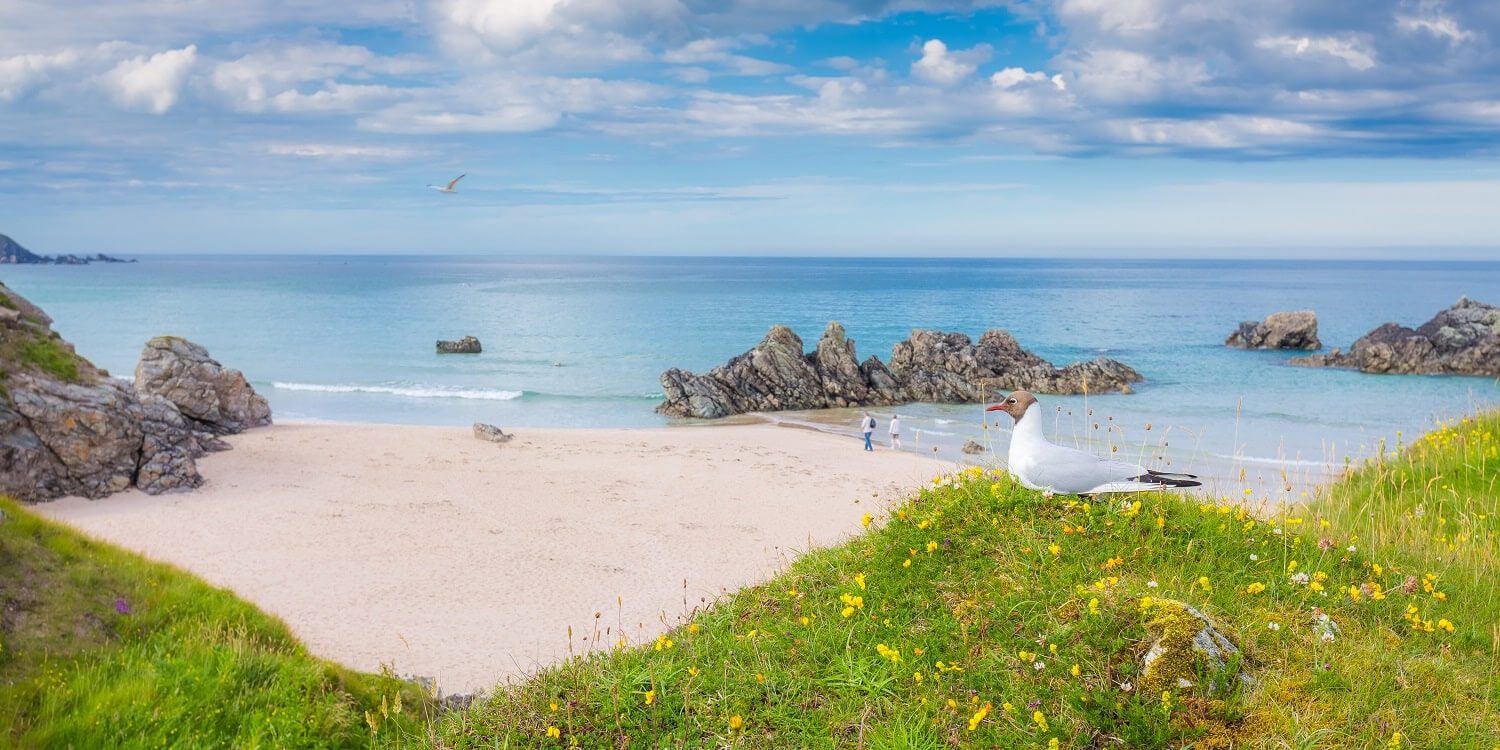
Achmelvich Beach, near Lochinver, has white sand and turquoise water that can look almost tropical in good weather.
The surrounding rocky landscape creates excellent compositions.
Sunset can be particularly beautiful when warm evening light falls across the beach.
Other outstanding beaches in the north-west Highlands include Clachtoll, Oldshoremore and Sandwood Bay.
11. The Outer Hebrides
The Outer Hebrides contain some of Scotland’s most extraordinary coastal scenery.
Islands such as Harris and Lewis offer huge empty beaches, turquoise water, mountains and traditional crofting landscapes.
Luskentyre Beach is one of the most famous photography locations.
The beach has enormous stretches of white sand with views towards the mountains of Harris.
Changing tides constantly alter the landscape, creating patterns in the sand and shallow water.
Another excellent location is Seilebost Beach, which provides beautiful views across towards Luskentyre.
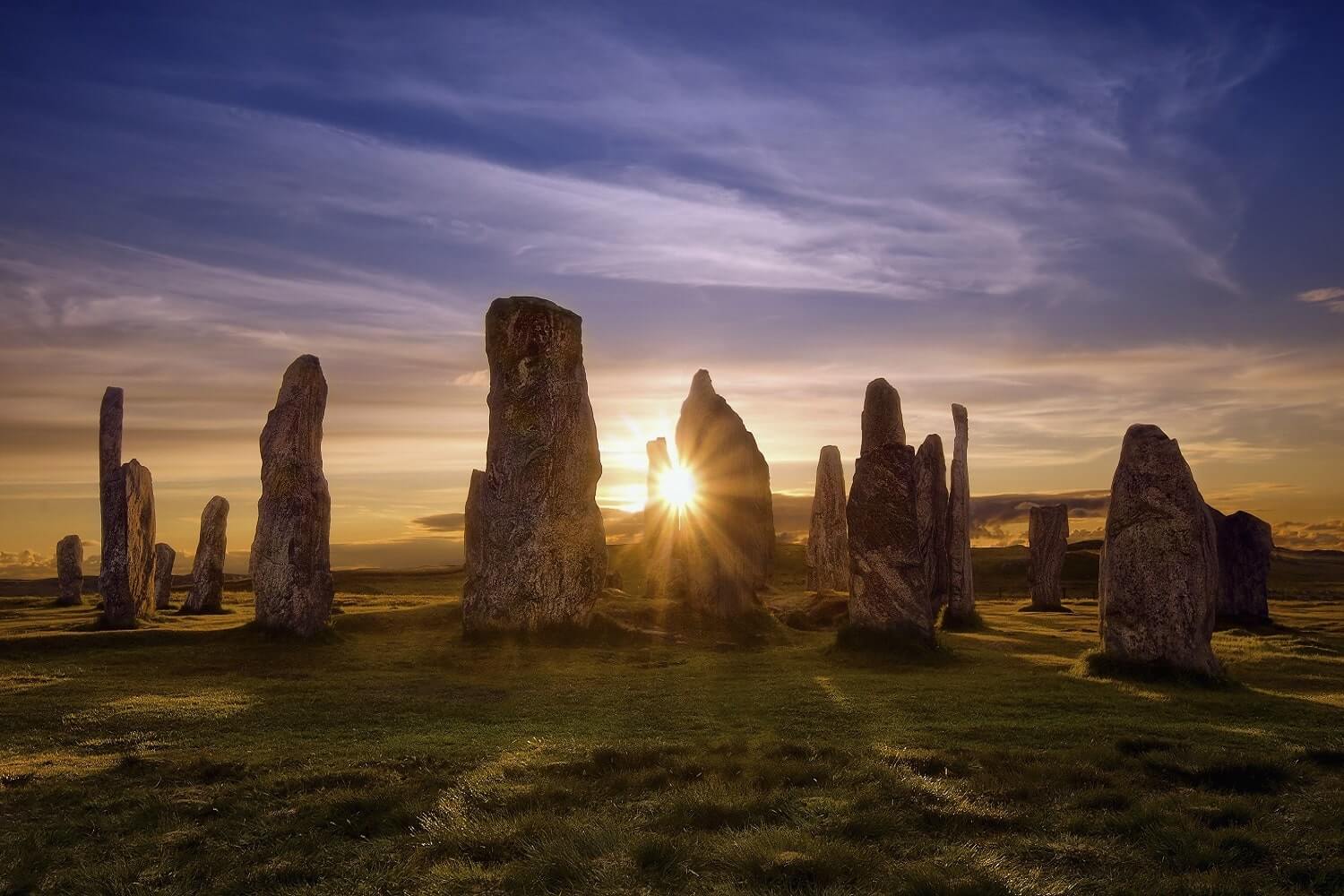
On Lewis, photographers can visit the Calanais Standing Stones.
These prehistoric stones are more than 4,000 years old and provide an extraordinary subject, particularly during sunrise, sunset or dramatic weather.
12. The Isle of Mull
Mull is another excellent island for photographers.
The colourful waterfront of Tobermory is one of the island’s most recognisable scenes.
Away from the town, Mull offers wild coastlines, mountains and opportunities for wildlife photography.
Nearby Duart Castle stands dramatically above the Sound of Mull.
The island is also known for white-tailed eagles, otters and other wildlife.
A trip to Mull can also be combined with neighbouring Iona and Staffa.
13. Fingal’s Cave and Staffa
The tiny island of Staffa is home to one of Scotland’s most unusual natural landmarks.
Fingal’s Cave is formed from hexagonal basalt columns created by ancient volcanic activity.
The geometric rock formations provide unusual photographic possibilities.
Boat trips to Staffa also offer views of the surrounding cliffs and, depending on the season, wildlife such as puffins.
The combination of geology, wildlife and sea scenery makes Staffa a rewarding photography excursion.
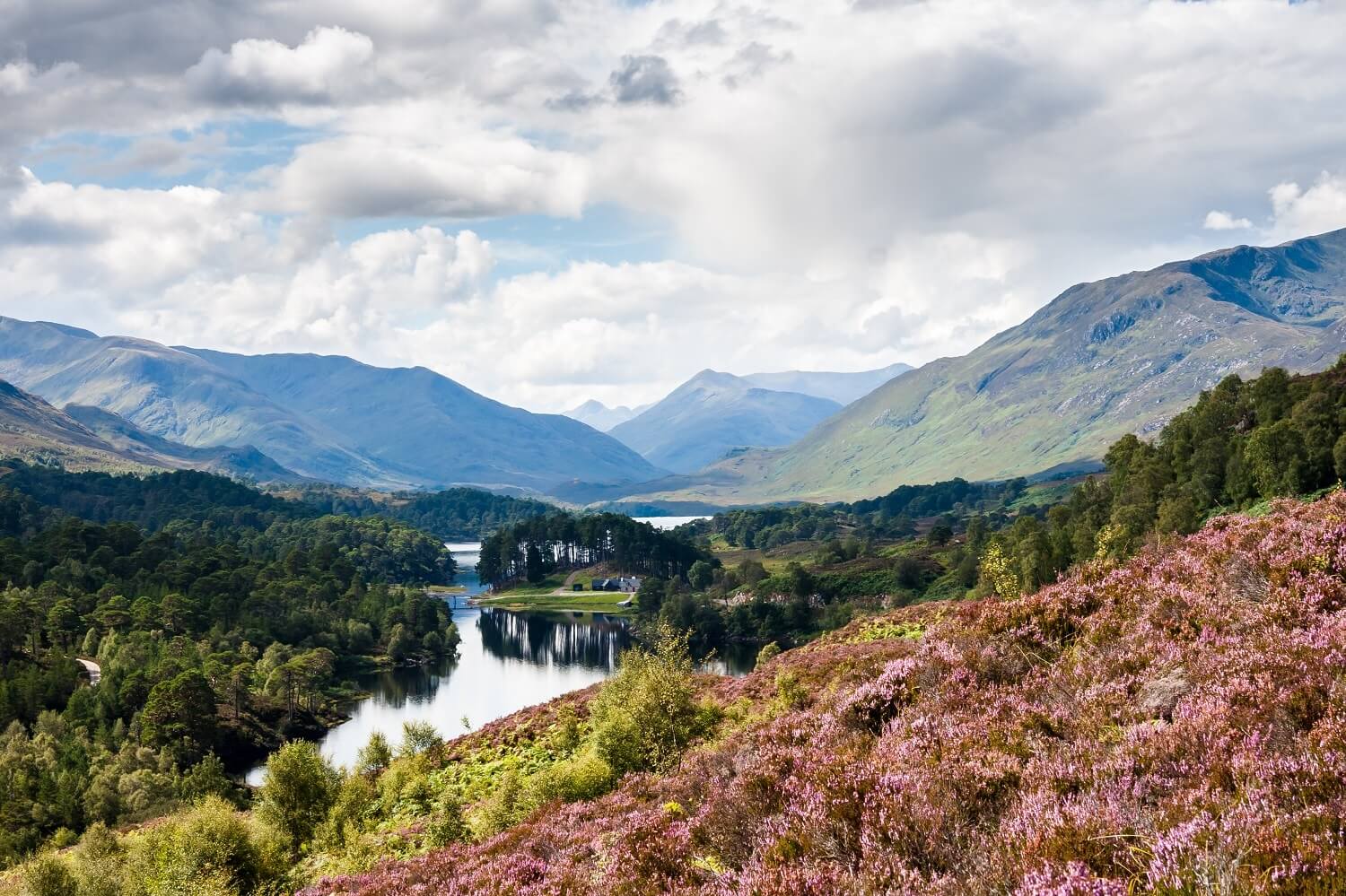
14. Glen Affric
Glen Affric is often described as one of the most beautiful glens in Scotland.
It lies west of Loch Ness and contains ancient Caledonian pine forest, mountains and lochs.
The landscape is particularly impressive during autumn when the colours change across the forests.
Photographers can find reflections around Loch Affric as well as mountain views throughout the glen.
Compared with locations such as Glencoe or Skye, Glen Affric can also feel quieter and less crowded.
That makes it ideal for photographers who want time to work on compositions without large numbers of visitors.
15. The Black Isle
Just north of Inverness lies the Black Isle, a peninsula with farmland, coastal villages and views across the Moray Firth.
Chanonry Point is particularly well known for dolphin watching.
Bottlenose dolphins can sometimes be seen remarkably close to the shore, providing excellent opportunities for wildlife photography.
The villages of Cromarty and Fortrose also offer traditional architecture, harbour scenes and coastal photography.
16. Bow Fiddle Rock
On the Moray coast near Portknockie is one of Scotland’s most distinctive sea arches.
Bow Fiddle Rock rises from the sea and resembles the tip of a violin bow.
It is a popular sunrise photography location because the rock can be silhouetted against the early morning sky.
Long exposures can soften the movement of the sea around the rock, producing dramatic results.
The surrounding Moray coastline contains numerous other cliffs, beaches and small fishing villages.
17. The Hermitage, Dunkeld
Woodland photography can be just as rewarding as Scotland’s mountain landscapes.
The Hermitage near Dunkeld contains towering Douglas fir trees, rivers and waterfalls.
Black Linn Falls is the main photography attraction.
During autumn, the surrounding woodland changes colour and creates beautiful scenes around the river.
Long-exposure photography works particularly well here because of the fast-moving water.
18. Loch Lomond
Loch Lomond is one of Scotland’s most famous lochs and offers a huge range of landscapes.
From the southern shores, photographers can capture islands and gentle hills.
Further north, the scenery becomes increasingly mountainous.
Locations such as Inveruglas, Luss and Balmaha offer different perspectives.
Early mornings are particularly rewarding when mist sits over the water.
Loch Lomond is also relatively accessible from Glasgow, making it a useful addition to shorter Scotland itineraries.
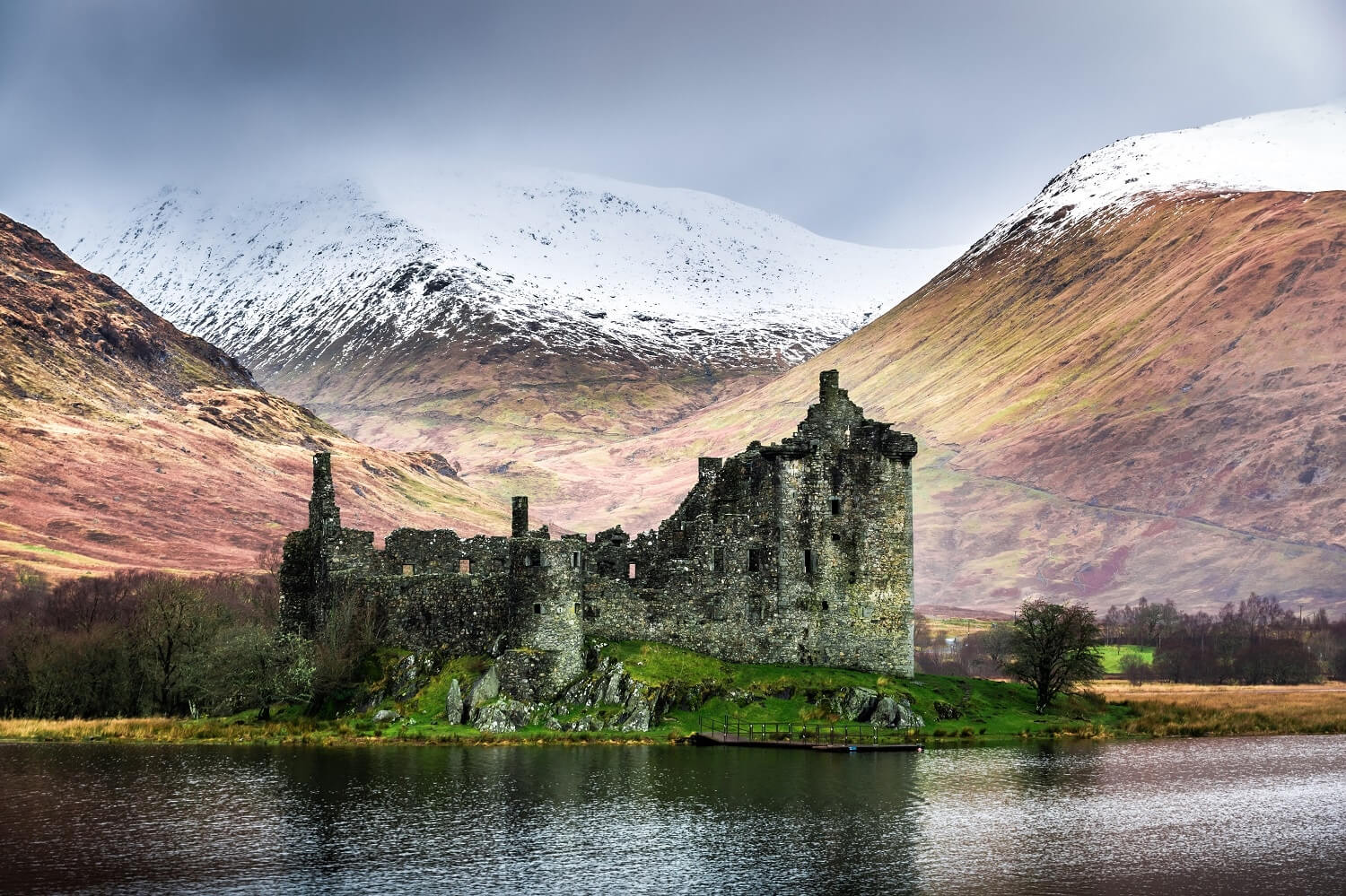
19. Kilchurn Castle
Kilchurn Castle is one of the classic Scottish landscape photography locations.
The ruined castle sits at the head of Loch Awe with mountains behind it.
The most famous composition is taken from across the loch.
When conditions are calm, the castle and mountains can reflect beautifully in the water.
Mist, autumn colours or snow can completely change the mood of the scene.
20. St Abbs and the Scottish Borders Coast
The east coast of Scotland contains dramatic scenery that is sometimes overlooked by visitors heading directly to the Highlands.
The village of St Abbs sits beside rugged cliffs and a small harbour.
The nearby nature reserve provides excellent coastal views.
Further along the coast, photographers can explore beaches, cliffs and fishing villages around the Scottish Borders.
21. Culross
For photographers interested in historic villages, Culross in Fife is one of Scotland’s best preserved examples.
Its narrow streets, traditional houses and ochre-coloured Culross Palace create a distinctive atmosphere.
The village has also appeared as a filming location in television productions.
Arriving early in the morning can provide an opportunity to photograph the streets before visitors arrive.
22. St Andrews
St Andrews combines historic architecture, coastline and golf heritage.
The ruins of St Andrews Cathedral provide dramatic architectural photography, particularly in changing light.
Nearby St Andrews Castle overlooks the sea.
Photographers can also capture the famous Swilcan Bridge on the Old Course.
West Sands Beach provides a completely different landscape, with long stretches of open coastline.
23. Rannoch Moor
Between Glencoe and Bridge of Orchy lies Rannoch Moor, one of Britain’s largest areas of wilderness.
The landscape is filled with small lochs, peat bogs and mountains.
Weather plays an important role here.
Mist, rain, snow and rapidly changing light can create dramatic atmospheric photographs.
Early morning is particularly effective when mist rises from the water.
24. The Road to Applecross
The road across Bealach na Bà towards Applecross is one of the most dramatic drives in Scotland.
Hairpin bends climb steeply through the mountains before reaching a high viewpoint overlooking the west coast.
From the top, photographers may be able to see towards Skye and the islands beyond.
The road itself can also be photographed as it winds through the landscape.
25. Castle Stalker
Castle Stalker occupies a tiny tidal island on Loch Laich near Appin.
Its isolated position surrounded by water creates a beautiful composition.
Sunset is often especially rewarding when the sky behind the castle takes on warmer colours.
There are viewpoints from the mainland where photographers can capture the castle with mountains in the distance.
Best Time of Year for Photography in Scotland
Scotland can be photographed throughout the year, but every season offers something different.
Spring
Spring brings longer days, fresh green landscapes and flowering woodland.
Snow may still remain on higher mountains, creating an interesting contrast with the greener valleys below.
Summer
Summer provides very long daylight hours, particularly in northern Scotland.
Photographers can work late into the evening, with sunsets occurring remarkably late around June.
The downside is that popular locations are generally busier.
Autumn
Autumn is one of the best seasons for landscape photography in Scotland.
Woodlands change colour and mornings can bring mist across lochs and glens.
Glen Affric, the Cairngorms and Perthshire are particularly beautiful at this time of year.
Winter
Winter provides some of Scotland’s most dramatic conditions.
Snow-covered mountains, low sunlight and changing weather can produce extraordinary photographs.
Days are shorter, but the light can remain soft for much of the day.
Photographing Scotland’s Changing Weather
One of the most important things photographers learn about Scotland is not to fear bad weather.
Cloud, mist and rain often create the most interesting photographs.
A mountain partially hidden by cloud can be far more dramatic than the same mountain beneath a completely clear blue sky.
Weather can also change incredibly quickly.
A location that appears dull when you arrive may look completely different twenty minutes later.
For this reason, patience is often one of the most useful photography skills in Scotland.
Planning a Photography Tour of Scotland
Trying to photograph every famous location during a single short trip can result in spending too much time driving and not enough time taking photographs.
Instead, consider concentrating on particular regions.
For example:
Highlands Photography Route
Inverness
Loch Ness
Glen Affric
Eilean Donan Castle
Isle of Skye
Torridon
Assynt
Western Highlands Photography Route
Glasgow
Loch Lomond
Kilchurn Castle
Glencoe
Glenfinnan
Mallaig
Isle of Skye
Northern Scotland Photography Route
Inverness
Black Isle
Dornoch
Assynt
Sutherland
Durness
Caithness
Each route could easily fill several days.
Private Photography Tours in Scotland
For photographers, travelling with a knowledgeable local driver-guide can make a major difference.
Many of Scotland’s best viewpoints are located away from large towns, and some of the most rewarding locations are easy to miss if you do not know where to look.
A private tour also allows more flexibility.
Instead of following a fixed coach timetable, photographers can spend longer at a location when the light is good, leave earlier for sunrise, or change direction when weather conditions look more promising elsewhere.
A bespoke Scotland photography itinerary can also combine famous landmarks with quieter locations that are rarely included on standard sightseeing routes.
Final Thoughts: The Most Beautiful Places in Scotland for Photography
Scotland provides an extraordinary variety of photographic landscapes.
Within a relatively small country, photographers can capture mountains, castles, beaches, ancient standing stones, colourful villages, wildlife, waterfalls and historic cities.
The famous locations are famous for a reason. Glencoe, the Isle of Skye, Eilean Donan Castle and the Highlands are genuinely spectacular.
But some of the most memorable photographs often come from unexpected places.
A quiet loch in the early morning.
A Highland road disappearing into mist.
A ruined castle beneath storm clouds.
A fishing village after rain.
Or a shaft of sunlight breaking through the clouds across a mountain.
That unpredictability is part of what makes photography in Scotland so rewarding.
Whether you are planning a dedicated photography holiday or simply want to capture beautiful images during a private tour of Scotland, leave space in your itinerary for changing weather, unexpected viewpoints and spontaneous stops.
Scotland rarely looks exactly the same twice and that is precisely why photographers keep returning.